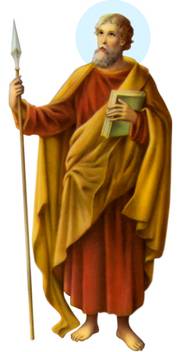
First Church at Karimpinkalakadavu, Pallom, Kottayam
Edathumpadickal family members were members of the Cheriapally
church in Kottayam till AD1837. But there was a long-cherished dream
of building a place of worship in Pallom. An early attempt was made by
Kurian Mathoo, Malelputhenpurackal. He visited Valiya Mar Dionysius
(Marthoma VI) at Udayamperoor near Kochi in AD1775 with a request to
build a church in Pallom. But that did not materialise. This incident is
mentioned in the diary notings of the Metropolitan. Kurichy pally was
built in AD1832. Some of our members attended Kurichy pally. All along
there were plans to build a church in Pallom. Kurian Itty Kariyakar of
Edathumapadickal Vadakekuttu(One of the first Christian Tehsildars of Travancore) took the initiative. At that time, Rev. Henry
Baker Sr., CMS Missionary was staying in Pallom in the Mission Centre.
With the help of Rev. Henry Baker, Kurian Itty built a church in Kollampara
near Karipinkalakadavu at Pallom. There would be a worship service with
a sermon by Henry Baker on Saturday and a Holy Qurbana on Sunday by
Vicar Rev. Fr. Mammen(Mammen Kathanar) from Omalloor.
The difference of opinion between Rev. Henry Baker
and Mr. Kurian Itty
The land for this church was donated by Kurian Itty of Edathumpadickal
Vadakkekuttu. As there was a conflict between the Anglican and Syrian worship, Rev.Henry Baker Sr. took the charge by ousting Vicar Mammen Kathanar.
The first Holy Baptism of Itty Kochitty, the son of Kurian Itty Karyakar was
in the tradition of Anglican liturgy. This incident led to a decision to baptise
the child again at Cheriapally, Kottayam, which created a rift between
Rev.Henry Baker Sr. and Mr. Kurian Itty. This led to a split in the
Edathumpadickal family and some members attended either the Kurichy
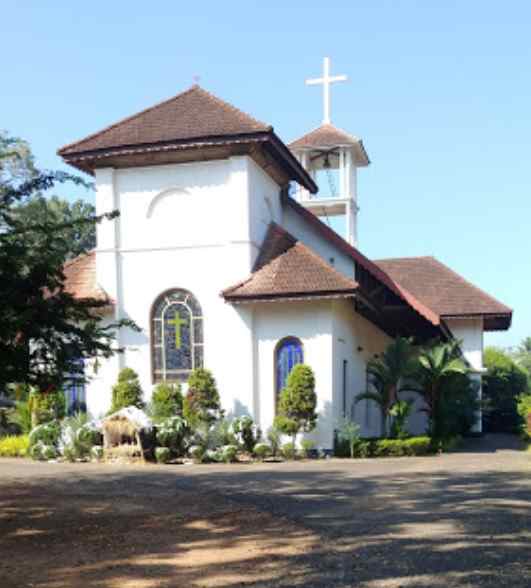
Valiapally or Cheriapally Kottayam. A few members continued their membership at the Karimpinkalakadavu Church. This Church is built in AD1837 and it is today's the St. John
the Baptist’s C.S.I Syrian Church, Pallom.[Picture - St. John the Baptist CSI Syrian Church, Pallom]
Top
Building a church at Pallikunnel and its demolition - The efforts of Pallikadavil Thoman Kurian to build a new church(പള്ളം സെൻറ് പോൾസ് ഓർത്തഡോൿസ് സുറിയാനി പള്ളി)
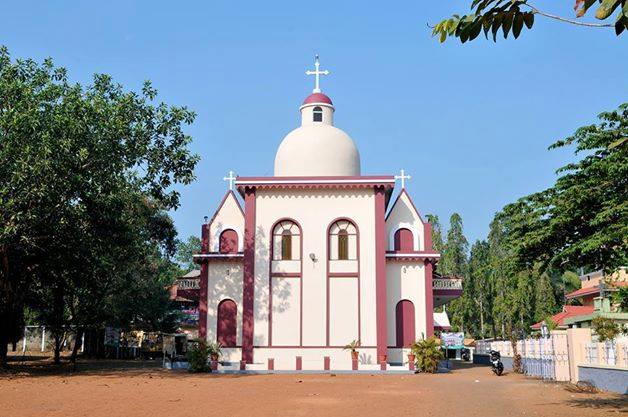
Edathumpadickal family still cherished a wish to build a church in Pallom.
Edathumpadickal Pallikadavil Thommen Kurian, son of Kurian Itty, took the
initiative for this mission. Under his leadership a church was built at Pallikunnel
property (presently the Central Stores of KSEB Office). Unfortunately, due to
the influence of the missionaries with the state government, the church was
demolished and shifted to another place.
The indefatigable Pallikadavil Thomman Kurian took up the responsibility to
construct a new church in 1865 AD, near Mundakathilkadavu. Under the able Vicarship of Eruthickal Kathanar
and Venkadathu Kathanar, Holy Qurbana and other spiritual needs of the members were carried out peacefully from the church. This church is the present
St. Paul’s Orthodox Syrian Church(പള്ളം സെൻറ് പോൾസ് ഓർത്തഡോൿസ് സുറിയാനി പള്ളി) at Pallom.
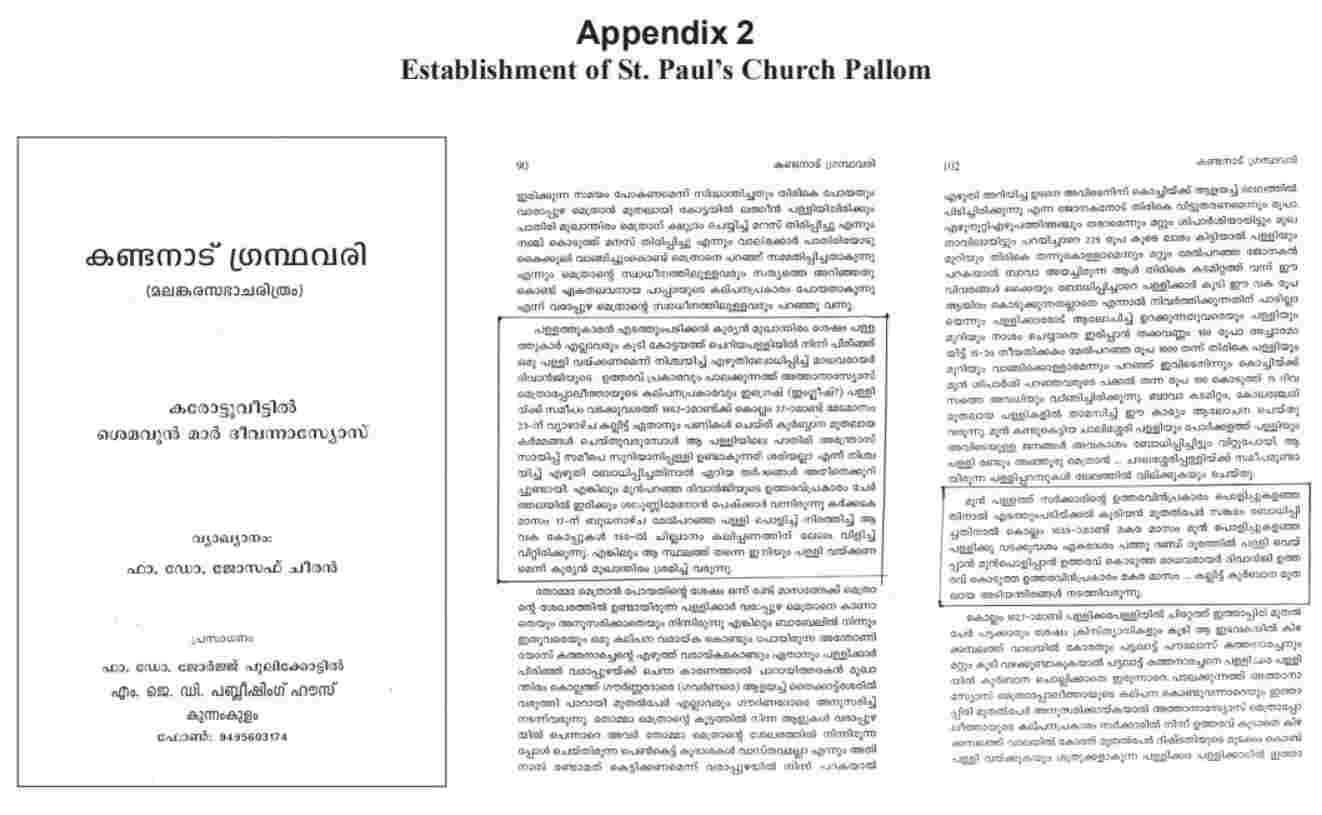
The Book Kandanad Grandhavari - Malankara Sabhacharithram (കണ്ടനാട് ഗ്രന്ഥാ വരി - മലങ്കര സഭാ ചരിത്രം) by H.G. Karottu Veettil Semavoon Mar Divannasyos(H.G. Simon Mar Dionysius) is considered as one of the most authentic history liturature about the Saint Thomas Christians in early 19th century. The original of the book is literally hand writen by the author and later the book was interpreted by Fr. Dr. Joseph Cheeran, who was the 1st rank holder in Malayalam Literature from Kerala University. The book is the most reliable one its category and a valuable one for students seeking for church history in 19th century, as the book is written as a commentary or day to day event basis by a witness. Kandanad was the ruling capital of Malankara Sabha in the AD1653-1815 period and that caused the name of the book Kandanad Grandhavari.
In the pages 90 and 102 of the book, the author has explained the efforts of Edathumpadickal Kurian to establish a church with Syrian tradition in Pallom area.
Church Constructed by
Mr. V. I. Mathen, Kallooparampil - മോർ ഇഗ്നാത്തിയോസ് യാക്കോബായ സുറിയാനി പള്ളി(കല്ലൂപ്പറമ്പൻ പള്ളി)
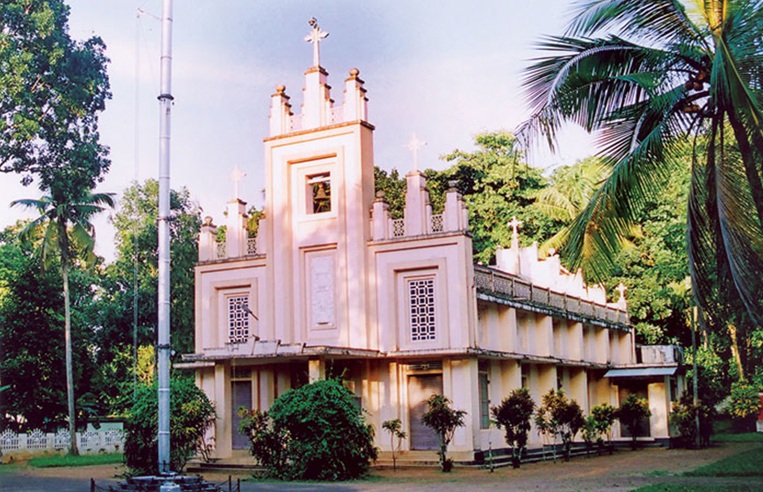
In 1929 another church was built near Buchanan junction, Pallom by
Mr.V.I. Mathan, Kallooparampil. This church is the present St. Ignatius Jacobite Syrian Chruch
(Kallooparampil/Kallooparamban Pally) at Pallom. His Holiness Moron Mor Ignatius Elias III,
Patriarch of Antioch, visited this church in December 1931 and stayed there for
one week. His Holiness ordained Mr. V.I. Mathen’s youngest son George
(Rev. Fr. V.M. Geevarghese Kallooparampil) as Deacon on 04-01-1932. He
was the President of Edathumpadickal Family Meet 1985-2015 and Patron till
his death on 08-09-2016. This Pontiff, H.H. Ignatius Elias III, who was called to
eternal life by the God Almighty on 13-02-1932 is the only Patriarch of Antioch
whose remains are interred in Malankara (Manjanikkara Dayara, Omalloor,
Pathanamthitta district) and his tomb became a place of pilgrimage. Later he
was declared Saint by the Holy See of Antioch.[Picture - St. Ignatius Church, Pallom built in AD1929].
Mulanthuruthy Padiyola AD1876
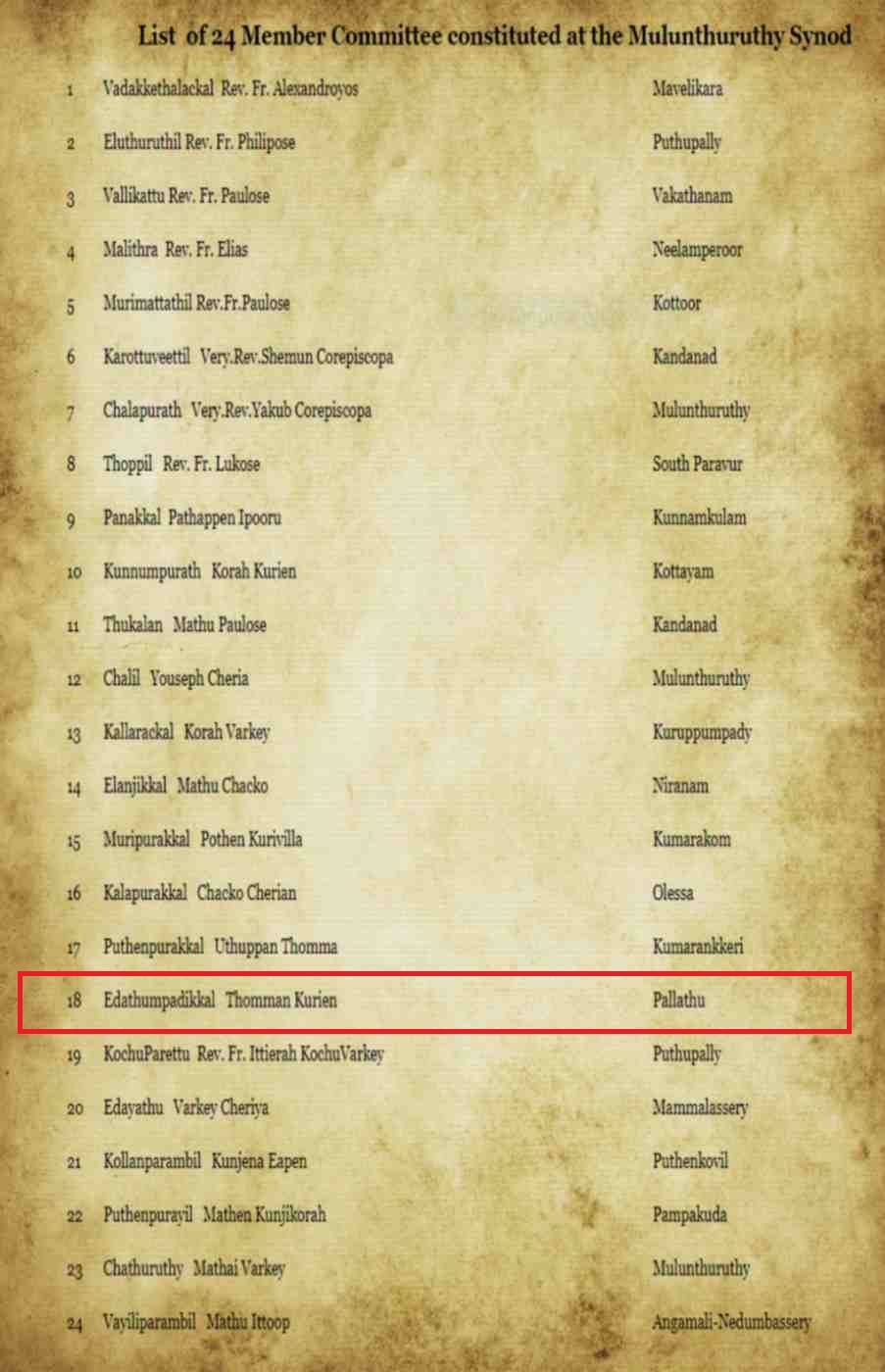
St.Thomas Christians had always embraced higher education and democratical thinking. Ofcourse, the education has caused lot of different opinions and healthy ideological arguments among the Church believers. The Mulanthuruthy Synod (മുളന്തുരുത്തി പടിയോല) was a result of such healthy arguments within the Church and later it caused the division of the Malankara Church in two fractions. The Synod of Mulanthuruthy happened in the 19th Century [15, 16, 17 of Midhunam 1051 M.E. (28th, 29th & 30th June, 1876)]. The synod represents the inauguration of an official relationship of a section of the Malankara Church with the Patriarch of the West Syrian Church. This Synod was called and presided over by Patriarch Peter IV of the West Syrian Church. 103 churches of the Malankara Church represented there.
The reason of stating the Mulanthuruthy Synod here is, even though it caused a division in the Church, it is a historically important incident. Out of the 103 Churches that participated in the Mulanthuruhi Synod, one was Pallom and Sri. Thomman Kurien Edathumpadickal was the person represented Pallom. Sri. Thomman Kurien was in the 24 Member Committee of Mulanthuruthy Synod.
Malankara Church and St. Thomas Christians have gone through many divisions and they are following different liturgies and traditions. Our family members are now in various churches such as Orthodox, Jacobite, CSI and Marthoma etc. Even when facts are as narrated above, by the Grace of Almighty God, the affection and love among the family members remains unchanged.
Click here to see more details of the Mulanthuruthy Padiyola and its 24 Committee List
See more details and historical evidences in the
Historical Evidences page of the website.